
Shoulder simulator
The clinical need
Approximately 1 in 3 people over 60 years old suffer from shoulder rotator cuff tendon tears, which cause pain and decrease mobility of the shoulder. Options for surgical rotator cuff repair are limited and include suture repairs and augments. However, currently, there are no pre-clinical testing methods to assess which repair methods are most suitable for a specific type of injury.
 Project challenge
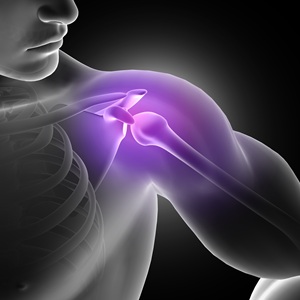
A team led by Professor Sophie Williams at the University of Leeds have developed a shoulder simulator for the biomechanical evaluation of available rotator cuff tear repair techniques. The researchers wanted to understand the market opportunity for their innovation and identify suitable commercialisation strategies.
How did Medipex help
Medipex helped to define the clinical need and highlighted gaps in the clinical pathway. A survey of current treatments on the market and in development was conducted to identify potential partners and customers for the proposed innovation. This included IP landscape searches and competition review to identify companies active in the surgical shoulder repair market.
The project was funded by PBIAA (Place-Based Impact Acceleration Account) POM (Proof of Market)
Link: https://www.imbe.leeds.ac.uk/home/epsrc-place-based-impact-acceleration-account/
Impact
The Proof of Market study provided estimated numbers of surgical procedures of interest and led to identifying other high-volume procedures where the proposed shoulder simulator could be used. The competition review highlighted similar solutions, both in the research phase and commercially available. Analysis of these solutions will help to understand the USP and strategies for commercialisation, as well as potential regulatory implications. Possible collaborators and partners were suggested. The UoL team will use this knowledge to apply for further funding such as PBIAA Proof of Concept funding.
Client testimonial
‘The Medipex team was very communicative and did a detailed market opportunity analysis, which helped us to define our value proposition and inform a proof of feasibility funding application.’ Sophie Williams, Professor in Medical Engineering
Image designed by Freepik